Social Security Administration: Benefit Growth, Payment Updates and Service Restructuring Shape 2026

Washington, D.C. — May 24, 2026
The U.S. Social Security Administration (SSA) is entering a pivotal phase in 2026 as millions of Americans adjust to higher monthly payments, updated benefit thresholds, and evolving service delivery across the agency.
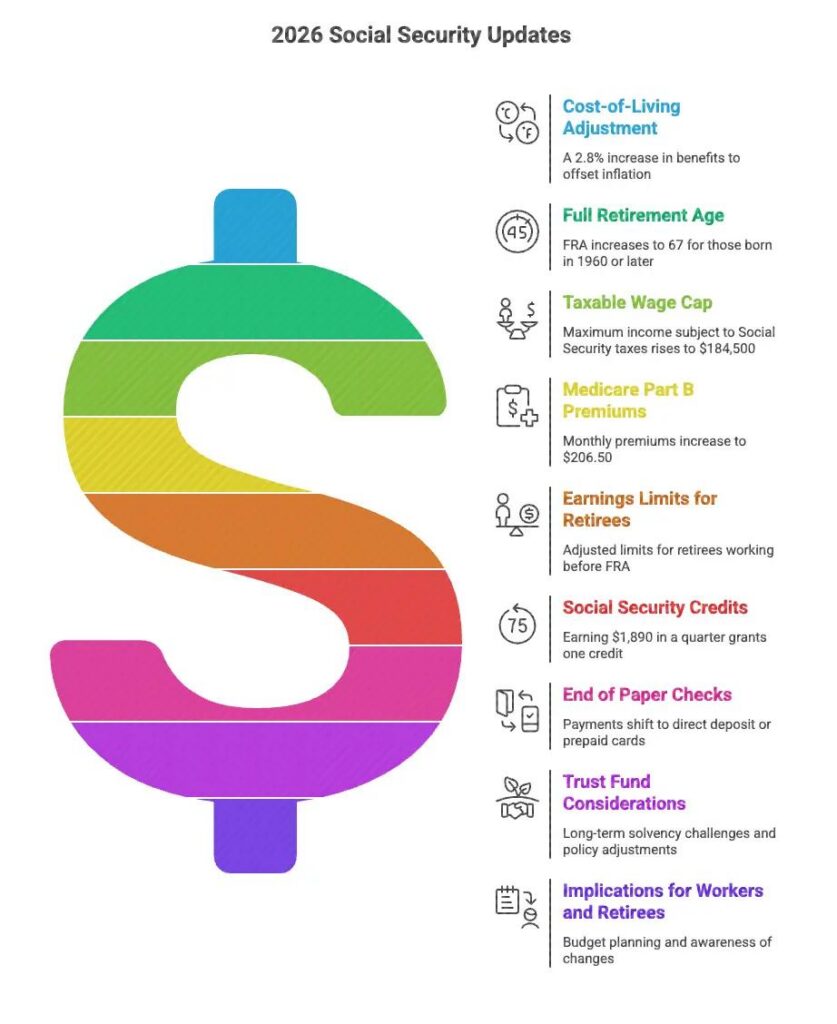
The biggest nationwide change remains the 2.8% Cost-of-Living Adjustment (COLA) that took effect in January 2026. According to SSA, nearly 71 million beneficiaries are receiving higher payments this year to help offset inflation and preserve purchasing power. Average monthly retirement benefits increased from $2,015 to approximately $2,071, while the maximum retirement benefit at full retirement age rose to $4,152 per month.
The adjustment also affects Supplemental Security Income (SSI). Federal payment standards increased to $994 per month for individuals and $1,491 for couples, while Social Security’s taxable earnings cap climbed to $184,500 for 2026.
Meanwhile, attention has shifted to benefit distribution as the SSA completes its May payment cycle. The agency continues using its longstanding schedule based largely on beneficiaries’ birth dates, with the final round of May payments scheduled for recipients born later in the month. Officials continue encouraging recipients to manage records and updates through their online accounts and official service channels.
At the operational level, the SSA is also reshaping how it delivers services. Recent reporting indicates the agency plans to close several National Hearing Centers after increased adoption of virtual appeals and remote case processing. Reports indicate the transition is designed to streamline hearings without broad workforce reductions.
Agency leadership and modernization efforts remain under scrutiny as policymakers and beneficiaries watch for improvements in customer service, technology upgrades, and processing capacity. The SSA has continued publishing updates on executive leadership and service initiatives throughout the year.
Looking ahead, analysts are already watching inflation data for clues about the 2027 COLA outlook, although any future adjustment remains preliminary and subject to official calculation methods.
Bottom line: For beneficiaries, 2026 is defined less by sweeping structural reform and more by practical changes—larger checks, updated eligibility thresholds, and a gradual shift toward digital-first service delivery across one of America’s largest public benefit systems.