America’s Most Important Safety Net Is Entering a Stress Test
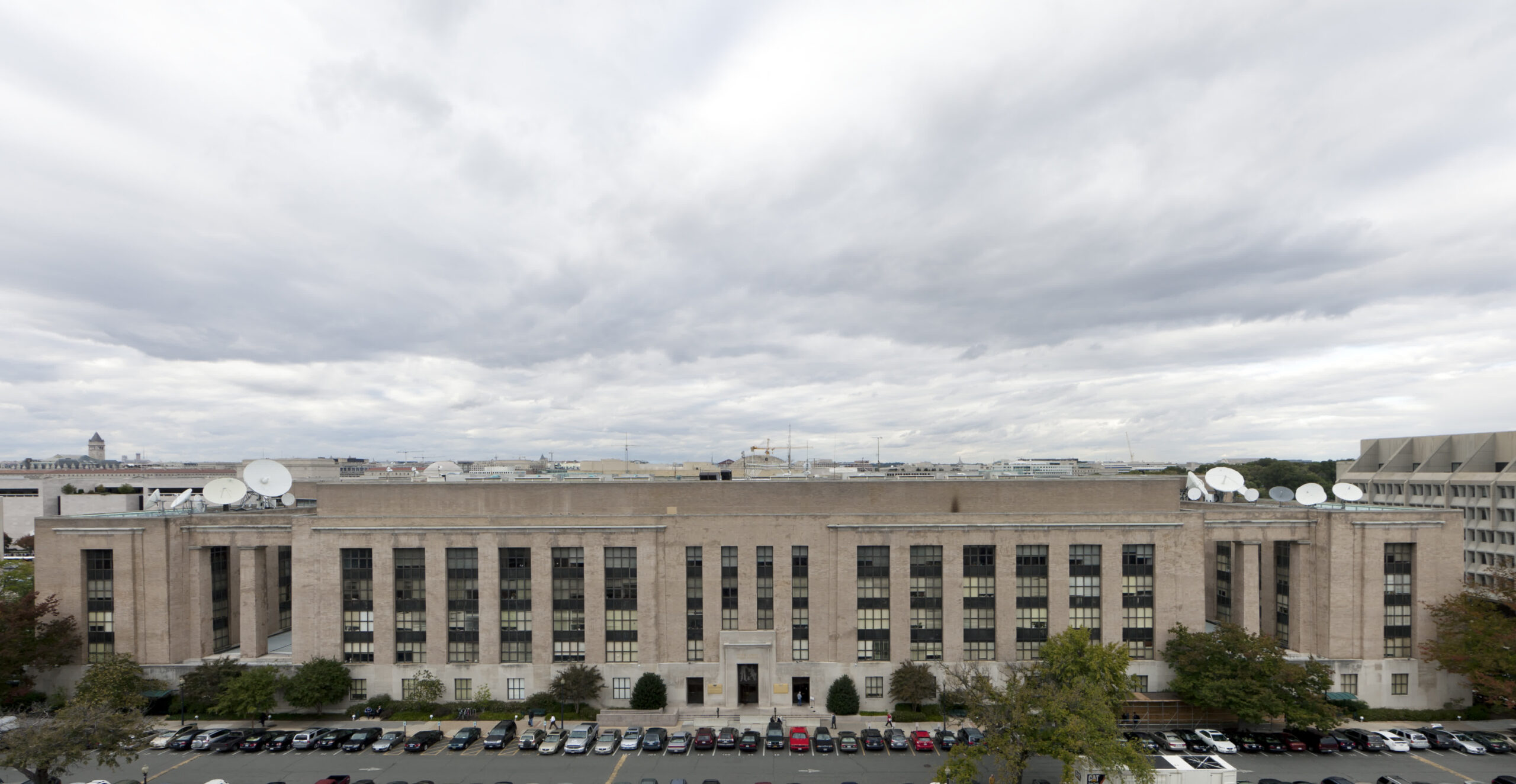
For decades, the Social Security Administration (SSA) functioned as one of the rare American institutions that citizens across political lines largely trusted. Checks arrived predictably. Disability hearings moved slowly but steadily. Retirees and disabled Americans saw the agency less as a political battleground than as a permanent feature of American life.
That assumption is beginning to fracture.
The SSA now sits at the center of a broader national struggle over the future size, cost, and capacity of the federal government. Recent staffing reductions, technological restructuring, mounting demographic pressure, and intensifying political fights over long-term solvency have transformed the agency from a quiet bureaucracy into one of the most consequential pressure points in American governance.
A Demographic Wave Is Colliding With Administrative Retrenchment
The underlying challenge facing Social Security is not new: America is aging rapidly. Millions of baby boomers are now entering or already living in retirement, dramatically increasing the number of beneficiaries dependent on the system each year.
At the same time, however, the SSA has been shrinking operationally rather than expanding. Multiple reports in 2025 and 2026 documented substantial workforce reductions inside the agency, including cuts to customer-service personnel, administrative law judges, and field-office staffing. Analysts estimate the agency lost roughly 12% to 13% of its workforce within a year.
The contradiction is stark: demand for Social Security services is climbing precisely as institutional capacity is being reduced.
This matters because Social Security is not simply a payment system. It is an administrative machine handling retirement claims, disability adjudications, Medicare coordination, survivor benefits, fraud prevention, appeals, identity verification, and customer assistance for tens of millions of Americans.
When staffing falls below operational demand, the consequences are not abstract. They appear as longer phone waits, delayed disability hearings, crowded field offices, processing backlogs, and growing frustration among vulnerable populations who often have limited digital literacy or mobility.
The Real Risk Is Not Immediate Benefit Collapse — It Is Administrative Erosion
Public discussion about Social Security often centers on insolvency headlines. While the trust fund issue is serious, many Americans misunderstand what “insolvency” actually means.
Even if Congress fails to act before projected trust-fund depletion in the early 2030s, Social Security would not disappear. Payroll taxes would continue funding a substantial portion of benefits. The more realistic danger is automatic benefit reductions unless lawmakers intervene.
But the more immediate and politically underappreciated risk may be institutional degradation rather than financial collapse.
Social Security depends heavily on public confidence. If beneficiaries begin experiencing persistent service failures — endless hold times, inaccessible field offices, delayed claims processing, inconsistent identity verification systems, or digital outages — confidence in the institution itself weakens.
That erosion can become self-reinforcing. Administrative failures increase public anger. Political anger accelerates demands for restructuring. Restructuring often creates further operational instability.
In that sense, the SSA increasingly resembles other strained public systems in modern America: under pressure not because demand vanished, but because demand kept rising while institutional investment stagnated.
The Technology Push Could Help — Or Deepen Exclusion
SSA leadership has argued that modernization efforts, including upgraded phone systems and expanded digital services, will improve efficiency and customer experience. Commissioner statements have emphasized modernization as a path toward “best-in-class customer service.”
There is logic behind the strategy. The agency handles enormous transaction volumes, and digital automation could reduce bottlenecks that currently consume human labor.
Yet modernization inside Social Security carries unusual risks because the agency serves populations disproportionately affected by technological barriers: elderly Americans, disabled individuals, low-income households, and citizens with limited internet access.
Recent research examining government identity-verification systems found that blind and low-vision Americans often face severe accessibility barriers during authentication processes for public services.
The broader implication is important: efficiency reforms that work well for digitally fluent users may unintentionally marginalize those most dependent on Social Security assistance.
This creates a policy paradox. The federal government wants lower administrative costs and faster automation. But the populations requiring the most support are frequently the least capable of navigating highly digitized systems independently.
Why Social Security Has Become Politically Explosive
Social Security occupies a unique position in American politics because it touches nearly every family while remaining extraordinarily expensive.
As federal debt rises and healthcare costs expand, pressure to reform entitlement spending will intensify regardless of which party controls Washington. At the same time, Social Security remains politically dangerous to cut directly because retirees vote at exceptionally high rates.
This tension is increasingly pushing political battles away from overt benefit reductions and toward administrative restructuring, staffing levels, eligibility enforcement, anti-fraud measures, and operational redesign.
That explains why debates around workforce reductions inside SSA have become so heated. Critics argue that aggressive staffing cuts effectively function as “backdoor benefit reductions” by making the system harder to access. Supporters counter that modernization and efficiency reforms are necessary to contain federal costs and reduce bureaucratic bloat.
Both arguments contain elements of truth.
The United States almost certainly does need a more technologically modern Social Security system. But modernization without sufficient operational capacity risks creating a brittle institution precisely when demographic pressures are intensifying.
The Bigger Story: America Is Testing the Limits of Administrative Government
The deeper significance of the Social Security debate extends beyond retirement policy.
The SSA has become a real-time test of whether the modern American state can still administer large-scale public systems effectively under conditions of polarization, fiscal pressure, aging demographics, and rapid technological change.
For much of the twentieth century, Americans generally assumed that federal administrative capacity would steadily expand alongside national wealth and population growth. That assumption no longer appears secure.
Today, the central question is not merely whether Social Security can remain solvent. It is whether the government can maintain the institutional competence required to operate systems on which tens of millions depend.
If the SSA stabilizes staffing, modernizes carefully, and regains public confidence, it could become a model for adaptive governance in an aging society. If not, Americans may increasingly encounter a future in which core public institutions technically survive while gradually becoming harder to access, slower to function, and less trusted.
That would represent something larger than a retirement-policy problem. It would signal a broader weakening of state capacity at precisely the moment Americans are becoming more dependent on it.
The future of Social Security, therefore, is no longer only about retirement checks. It is about whether the United States can still sustain large public institutions in an era defined by fiscal strain, political mistrust, and demographic transformation.
Sources: SSA official releases and service data, Center on Budget and Policy Priorities, Business Insider, MarketWatch, Congressional fiscal analyses, and recent academic research on government identity-verification systems.