Berkshire Hathaway’s Quiet AI Pivot: Inside the Portfolio Shift Reshaping the Post-Buffett Era
For decades, Berkshire Hathaway’s identity was built on disciplined value investing and skepticism toward fast-moving technology narratives. But the latest portfolio disclosures suggest something more nuanced is underway: Berkshire is not chasing artificial intelligence hype—it is positioning around the infrastructure, distribution, and economics of AI.
The signal became impossible to ignore after Berkshire’s newest filing revealed one of its most aggressive portfolio rotations in years. Under CEO transition leadership, the conglomerate sharply increased exposure to AI-linked mega-cap technology while exiting several legacy positions.
At the center of that shift: one company.
Berkshire’s Biggest New AI Statement: Alphabet
The standout move in Berkshire Hathaway’s latest portfolio update was a dramatic expansion of its stake in Alphabet.
Recent filings indicate Berkshire more than tripled its Alphabet holdings, lifting the position to roughly tens of billions of dollars and making it one of the company’s largest equity bets.
This matters because Alphabet is no longer simply an advertising company.
Its AI stack now spans:
- frontier AI models,
- cloud infrastructure,
- enterprise AI deployment,
- consumer distribution through Search and Android,
- and increasingly, AI monetization at global scale.
For Berkshire, Alphabet appears to satisfy a classic Buffett test: dominant economics combined with durable competitive advantages—even if the underlying technology is evolving rapidly.
Berkshire’s AI Exposure Is Larger Than Many Investors Realize
Despite Berkshire’s reputation as a conservative conglomerate, analysts increasingly estimate that around one-fifth to nearly one-quarter of its publicly disclosed equity portfolio now sits in AI-connected businesses.
That exposure is concentrated rather than diversified.
Key AI-linked holdings include:
1. Apple
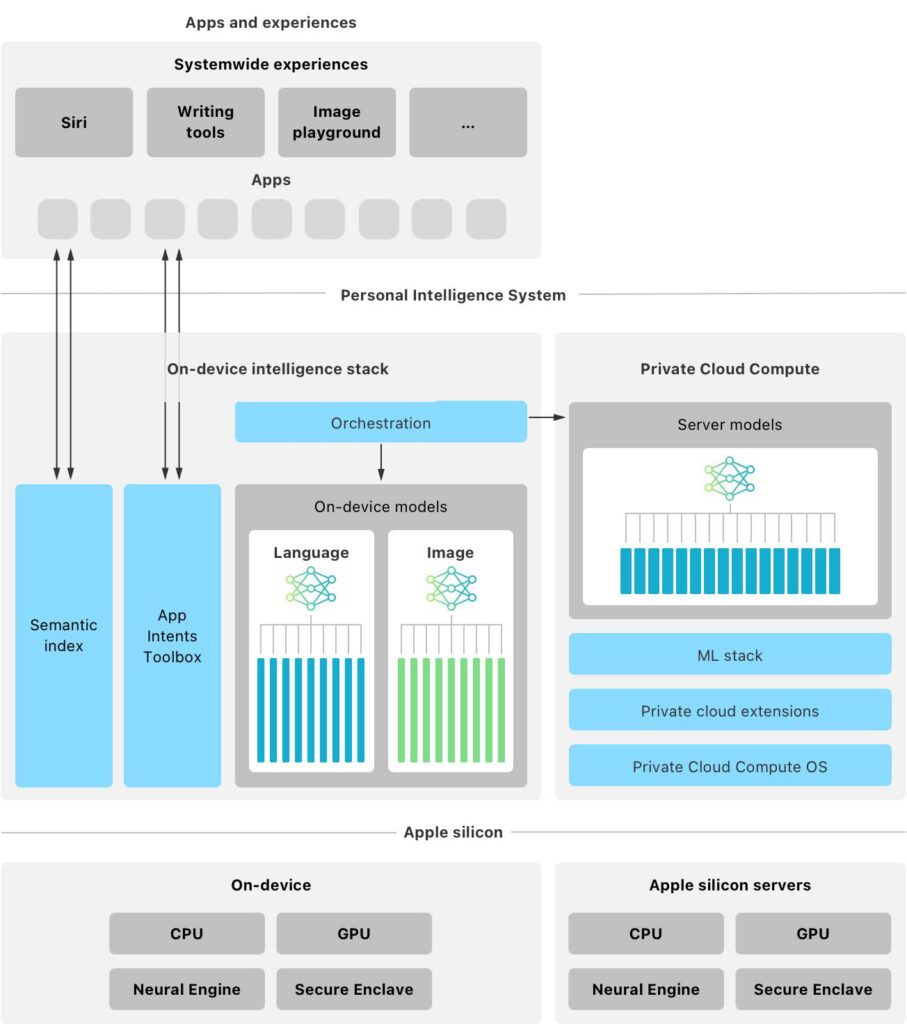
Apple remains among Berkshire’s largest positions. While Apple entered the AI race later than peers, its strategy increasingly centers on embedding AI directly into devices and services rather than competing solely in model development.
2. Alphabet
Alphabet represents Berkshire’s clearest direct AI platform investment, combining cloud, chips, models, and distribution.
3. Historical exposure through Amazon
Amazon had long offered indirect AI participation through AWS and enterprise infrastructure, although Berkshire’s latest filings show the position was exited during the recent reshuffle.
The Bigger Story: Berkshire Is Buying AI Economics, Not AI Narratives
What makes Berkshire’s positioning unusual is that it still avoids many of the market’s most speculative AI names.
Rather than buying the companies promising the future, Berkshire appears increasingly focused on businesses already generating cash from AI adoption.
That distinction reflects a philosophy that predates generative AI by decades:
Invest where technology becomes indispensable—not merely fashionable.
Recent comments from Berkshire leadership reinforce that posture. At Berkshire’s latest annual meeting, CEO Greg Abel acknowledged AI’s productivity potential while emphasizing that human judgment remains central to capital allocation.
The Post-Buffett Question
The latest filing also carried symbolic weight.
Although Warren Buffett remains chairman and influential, the portfolio changes mark one of the first major repositionings associated with the firm’s next era of leadership. Reports suggest responsibility across the portfolio is increasingly shared under the evolving structure around Greg Abel and Berkshire’s investment managers.
If the moves continue, Berkshire may no longer be viewed as an observer of the AI economy.
It may become one of its largest quiet beneficiaries.
Editor’s note: Berkshire’s public equity portfolio reflects only disclosed holdings and does not necessarily represent all capital deployment across the conglomerate.